> For the complete documentation index, see [llms.txt](https://boomi.markusschmidt.pro/llms.txt). Markdown versions of documentation pages are available by appending `.md` to page URLs; this page is available as [Markdown](https://boomi.markusschmidt.pro/boomi-console/help-text/target-path-resolution.md).
# Target Path Resolution
## Defaults
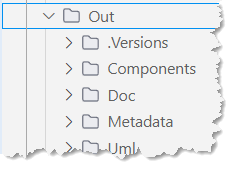
The *Target Path* defines where all the created (and updates) output is written to. By default, without any other settings provided, this is `{Workspace}\Out`:
Out Folder
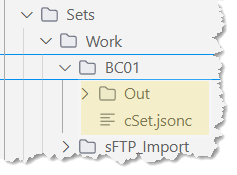
**Sets** have their own output folder in the set directory `{Set}\Out`:
Set output
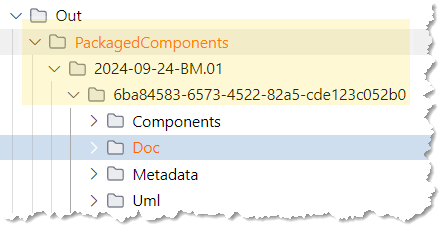
**Packaged Components** are writte to\
`Out\PackagedComponents\[PackageVersion}\PackageId:`
## Options to control the target
In general we distinguish between two different target directories:
* `OutDir` refers to the output in general: Metadata, Uml, Components.
* `DocDir` specifies the root folder where all documentation is written to
{% hint style="success" %}
The ides behind is that you may want to **maintain you documentation under GitHub**, which requires to have all documentation in a separate, version controlled directory**.** **GitHub has a very nice way to render the markdown documents.**
{% endhint %}
### See also
* [Common Arguments](/boomi-console/commands/arguments/common-arguments.md#outdir-o)
* [Common Arguments](/boomi-console/commands/arguments/common-arguments.md#docdir)
* [Application Settings](/boomi-console/library/configuration-files/application-settings.md#docroot)